Hidden Hazards in Your Cart: How to Spot Dangerous Counterfeits on Major Online Marketplaces
Modern digital shopping platforms have transformed the way households purchase daily necessities. Consequently, billions of global consumers browse digital storefronts to order electronics, cosmetics, apparel, and toys with a single tap.
However, convenience often carries hidden risks that jeopardize consumer well-being. In fact, regulatory crackdowns and consumer protection agencies reveal that unauthorized knockoffs flood major digital storefronts daily.
Furthermore, these counterfeit items are no longer mere cosmetic replicas of luxury handbags. Instead, counterfeiters now manufacture shoddy electrical appliances, toxic skincare formulations, and substandard infant toys that bypass mandatory safety checks.
Therefore, knowing how to spot dangerous counterfeits online has become a vital survival skill for modern shoppers. Through this thorough investigative guide, you will learn how to identify fake safety marks, evaluate seller profiles, inspect suspicious pricing, and keep dangerous goods out of your home.
Why Modern Counterfeits Pose Severe Health Hazards
Many shoppers mistakenly believe that buying a knockoff product only impacts brand profits. Nevertheless, consumer safety reports indicate that counterfeit consumer goods present immediate physical perils to users.
Legitimate manufacturers invest millions of dollars into engineering certifications, materials compliance, and toxicological assessments. Conversely, illicit factories cut corners to produce the cheapest possible replica without testing for consumer hazards.
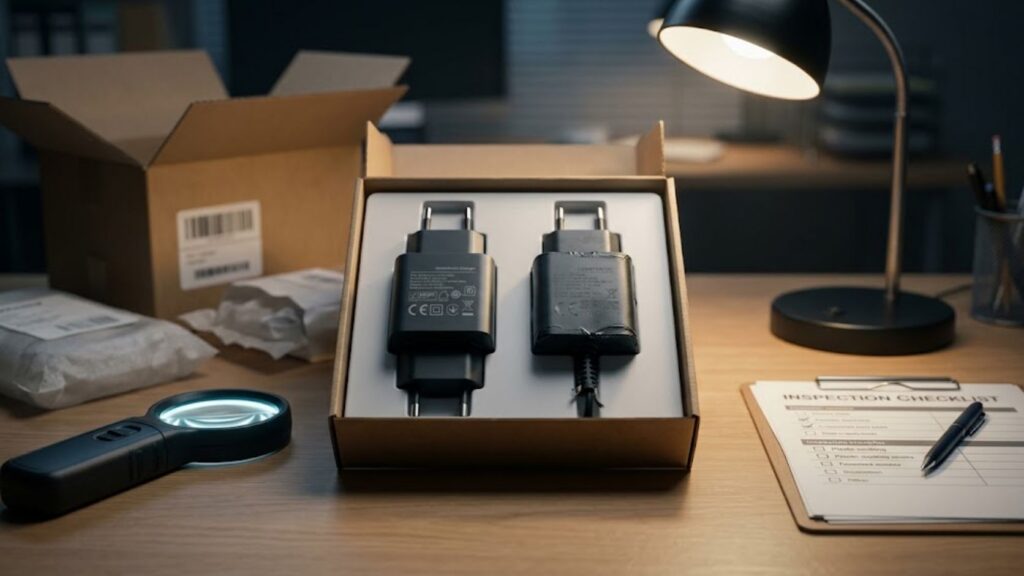
For instance, counterfeit lithium-ion replacement batteries and power adapters frequently omit internal thermal cutoff fuses. As a direct result, these defective components overheat rapidly, triggering house fires and catastrophic battery explosions.
Additionally, counterfeit cosmetics and personal care creams often contain prohibited heavy metals, including lead, mercury, and arsenic. These toxic ingredients cause severe chemical burns, endocrine disruption, and lasting organ damage.
Therefore, viewing counterfeit items as harmless bargains is a dangerous misconception that can put your family in harm’s way.
5 Critical Red Flags to Unmask Fake Goods on Digital Platforms
Fraudulent sellers have become adept at mimicking genuine product listings, photos, and packaging. Nonetheless, careful examination reveals distinct red flags before you ever click the checkout button.
Here are five critical warnings every online buyer must evaluate:
1. Absurdly Low Price Tags (Too Good to Be True)
Pricing remains the most obvious warning sign when shopping across open digital platforms.
- First, calculate the average market price of the authentic item across multiple reputable retail portals.
- If a listing offers a brand-new flagship item at a 70 percent discount, you are almost certainly looking at an illicit imitation.
- Authentic brands maintain strict minimum advertised price policies to protect their authorized dealer networks.
- Therefore, steep, permanent discounts on premium consumer electronics or high-end cosmetics should immediately prompt skepticism.
2. Dissecting Seller Credentials and Third-Party Fulfilment
Major online marketplaces operate as multi-vendor platforms where independent third parties sell alongside established brands.
- Check the “Sold By” and “Shipped By” lines: Authentic goods are typically sold directly by the brand or by verified authorized corporate partners.
- Examine the merchant’s business profile: Counterfeit syndicates frequently operate under nonsensical, randomly generated alphanumeric store names.
- Inspect the seller’s physical address: Fraudulent merchants often register temporary shell corporate addresses in distant jurisdictions to evade regulatory litigation.
- Consequently, always purchase directly from verified flagship storefronts whenever buying safety-critical goods.
3. Fabricated and Manipulated User Reviews
Customer feedback systems were created to guide buyers, but dishonest sellers frequently game these metrics through automated bot networks.
- Watch for review clustering: If a product received hundreds of five-star reviews within a forty-eight-hour window, these ratings are likely manufactured.
- Read the actual review text: Fraudulent listings often reuse old reviews from completely unrelated items, such as praising a phone charger for its soft cotton fabric.
- Check the critical one-star reviews: Disgruntled real buyers often post clear photographic evidence of melted plastic, chemical odors, or snapped structural parts.
4. Forged Safety Certifications and Blurred Badges
Consumer electronics and protective gear must display rigorous regional safety seals to verify independent laboratory compliance.
- Inspect certification marks carefully: Look for recognized testing lab marks such as UL (Underwriters Laboratories), ETL, CE, or FCC.
- Identify subtle design flaws: Counterfeiters often print the “China Export” logo, which cleverly mimics the European “CE” conformity mark by slightly narrowing the space between the letters.
- Look for missing registration numbers: Legitimate UL marks include an authorized file number beneath the logo that can be verified through public safety databases.
- Furthermore, poor print quality, misspelled technical jargon, and misaligned logos on packaging confirm that the item is a dangerous imitation.
5. Suspicious Packaging Materials and Missing Documentation
Counterfeiters minimize shipping weights and production overhead by utilizing flimsy, unbranded packaging.
- Genuine products arrive in custom molded packaging engineered to cushion sensitive components during international transit.
- Counterfeit products often arrive in generic plastic baggies without branded retail boxes, tamper-evident seals, or serialized labels.
- Moreover, knockoff items frequently lack printed safety instruction manuals, warranty registration cards, and official emergency hotline numbers.
- As a result, any product arriving without manufacturer documentation should be quarantined and never connected to home power circuits.
High-Risk Product Categories Demanding Extreme Caution
While a fake phone case might only cause cosmetic disappointment, certain merchandise categories carry life-altering safety consequences when forged.
| Product Category | Primary Hidden Hazard | Testing Standard to Verify |
|---|---|---|
| Replacement Phone Chargers | Catastrophic shock, arcing, and house fires | Official UL, ETL, or manufacturer certification |
| Infant Car Seats & Toys | Structural snapping, toxic lead paint, choking bits | ASTM F963, CPSC, or ISO safety compliance |
| Skincare & Fragrances | Severe chemical burns, heavy metal toxicity | Sealed packaging, batch codes, authorized retailers |
| Bike & Motorcycle Helmets | Catastrophic shell cracking upon minor impact | DOT, ECE 22.06, or Snell memorial certification |
| Power Tool Batteries | Thermal runaway, smoke inhalation, explosions | Verified OEM packs with internal protection circuits |
4 Actionable Habits to Protect Your Household
Safeguarding your home against counterfeit hazards requires consistent digital hygiene. Implement these four preventative shopping habits to minimize risk:
1. Purchase High-Risk Items Exclusively from Authorized Channels
When buying health products, infant gear, or electrical equipment, avoid unvetted third-party marketplace sellers entirely. Instead, purchase directly from official brand portals or brick-and-mortar retail chains that maintain direct distribution relationships with manufacturers. These authorized retailers enforce strict chain-of-custody protocols that prevent counterfeit infiltration.
2. Verify Serial Numbers and Batch Codes Upon Arrival
Legitimate manufacturers stamp unique serialization codes onto both the product chassis and the outer retail packaging. Upon unboxing your delivery, match the serial number on the device with the label on the box. Furthermore, visit the manufacturer’s official warranty portal to register the unit. If the system rejects the serial number as nonexistent or already registered to another user, you have received a counterfeit.
3. Conduct the “Weight and Smell” Physical Test
Your natural senses offer reliable clues when evaluating unboxed merchandise:
- The Weight Test: Counterfeit electronics universally feel unnaturally light because illicit factories omit copper heat sinks, structural brackets, and surge suppression circuitry. Compare the weight against published official manufacturer specifications.
- The Smell Test: Counterfeit plastics and adhesives omit expensive degassing procedures. Consequently, fake products emit pungent, acrid chemical odors that indicate off-gassing petroleum solvents and unstable resins.
4. Utilize Secure Payment Methods with Robust Buyer Protection
Never conduct transactions outside the official marketplace checkout infrastructure. Fraudulent sellers often urge buyers to wire funds directly or use unprotected peer-to-peer payment apps under the guise of processing discounts. Always utilize major credit cards that provide comprehensive chargeback guarantees in the event you receive dangerous or misrepresented merchandise.
What to Do If You Accidentally Buy a Dangerous Counterfeit
If you inspect an item and confirm that it is an illegal knockoff, swift action prevents financial loss and protects other consumers.
- Cease Use Immediately: Unplug the device, pack it away from children and pets, and never attempt to test its functionality.
- Document the Evidence: Capture clear, high-resolution photographs of flawed logos, missing certification badges, flimsy packaging, and the merchant’s packing slip.
- Demand a Refund from the Platform: Open a formal fraud dispute through the platform’s customer protection center, submitting your photographic evidence.
- Report the Merchant to Consumer Watchdogs: File an official safety complaint with national consumer product safety commissions and international anti-counterfeiting coalitions.
- Never Resell or Donate the Item: Disposing of dangerous goods responsibly prevents them from endangering another unsuspecting family.
Frequently Asked Questions About E-Commerce Counterfeits
Online shoppers frequently encounter confusing scenarios regarding counterfeit goods. Here are concise answers to common consumer inquiries:
- Does a “Fulfilled by Marketplace” label guarantee authenticity? Not necessarily. Many platforms utilize commingled inventory systems, where products sent by third-party sellers are stored in the same fulfillment bin as stock sourced directly from the brand. As a consequence, a fake item can occasionally ship even when buying from an authorized listing.
- Can a counterfeit device damage my other authentic electronics? Yes, absolutely. Shoddy power bricks lacking steady voltage regulation deliver erratic electrical surges into connected laptops, tablets, and smartphones, destroying their delicate motherboard power management chips.
- Why don’t marketplaces ban all counterfeiters instantly? Counterfeit syndicates operate thousands of automated burner accounts across multiple jurisdictions. Whenever platforms dismantle one fraudulent store, the syndicate launches dozens of replacement storefronts within hours, creating an ongoing game of regulatory cat-and-mouse.
Conclusion
The convenience of digital commerce should never come at the expense of your family’s personal safety. Learning to spot dangerous counterfeits online empowers you to see past manipulated product photography, artificial review scores, and unrealistic bargain pricing.
Therefore, maintain a vigilant mindset whenever purchasing health, infant, or electrical goods online. Inspect certification marks rigorously, scrutinize merchant records, and prioritize authorized distributors over questionable third-party bargains. By adopting proactive product safety habits, you can shop online with confidence, protect your hard-earned money, and ensure that every item entering your home is safe, reliable, and authentic!