Trapped by ‘Natural’ Claims? How to Smartly Read Skincare Ingredients and Avoid Greenwashing
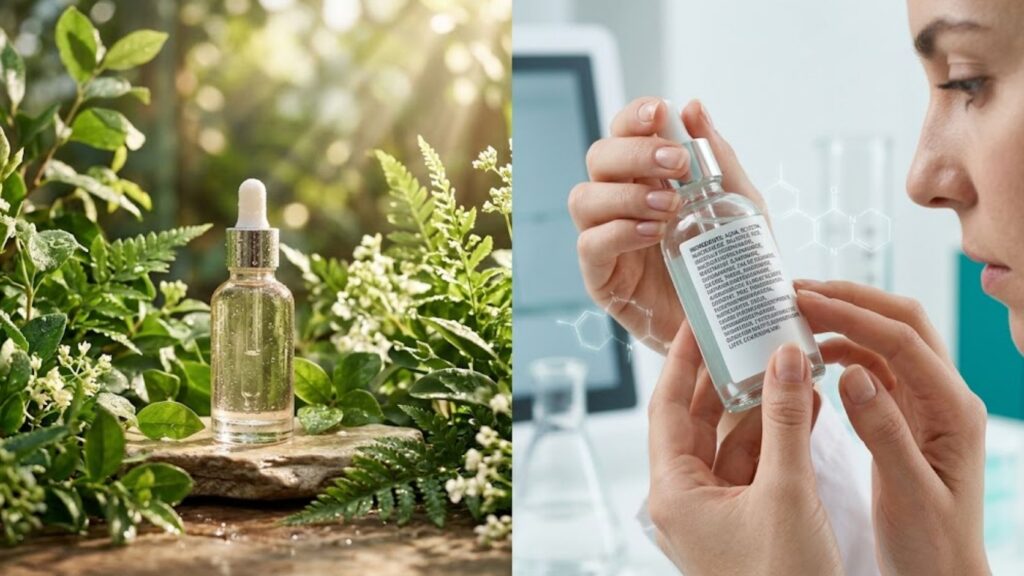
Many people assume that skincare products labeled “herbal” or “organic” are automatically gentle and safe for the skin. Indeed, aesthetic green packaging adorned with fresh botanical leaves rarely fails to entice prospective shoppers. However, all-natural claims are frequently nothing more than clever marketing strategies. Therefore, mastering how to read skincare ingredients independently serves as your strongest line of defense for skin health.
Furthermore, the term “natural” lacks a uniform, legally binding definition across the global cosmetics industry. Consequently, disreputable manufacturers freely slap this magic buzzword onto bottles even if they merely include a single drop of botanical extract. In fact, this manipulative environmental marketing tactic is widely known as greenwashing. Subsequently, this comprehensive guide exposes these promotional tricks and teaches you how to decipher cosmetic ingredient labels with precision.
1. Understanding the Greenwashing Phenomenon in the Beauty Industry
First, we must closely examine how greenwashing tactics proliferate throughout the beauty market. Essentially, this practice is a promotional strategy designed to project an eco-friendly image without robust scientific backing.
Frequently, brands deliberately package products in minimalist amber glass jars or recycled craft paper boxes. Then, they plaster trendy buzzwords like clean, pure, botanical, or eco-friendly across the front label. Yet, if you inspect the back of the bottle, the formulation is still dominated by generic synthetic bases.
- Manipulative Visuals: Brands deliberately display oversized illustrations of medicinal herbs on the front packaging.
- “Chemical-Free” Myths: They proclaim completely chemical-free formulas, ignoring the fact that pure water itself is a chemical compound.
- Absence of Independent Audits: The manufacturer offers zero legitimate proof of organic or ecological certification from accredited third-party bodies.
For this reason, you must never let the front aesthetics of a cosmetic package dazzle your judgment. Instead, immediately flip the product over to objectively evaluate its actual formulation.
2. The Chemophobia Myth: Why Natural Does Not Always Mean Safe
Secondly, we must dismantle the widespread misconception known as chemophobia among beauty consumers. Many individuals instinctively assume that all laboratory-synthesized compounds are hazardous and carcinogenic. Conversely, they believe that anything derived directly from the earth is universally benign for facial skin.
In reality, nature produces countless compounds that are acutely toxic or irritating to human physiology. For example, pure essential oils like lavender or citrus peel oil frequently trigger severe contact allergies. In fact, these aromatic plant extracts naturally contain potent allergen molecules such as limonene and linalool.
When you apply such volatile fragrant oils to reactive skin, the protective cutaneous barrier becomes inflamed. Consequently, the face stings, itches intensely, and develops unsightly erythematous rashes. Furthermore, toxic plant saps in the wild can permanently compromise cellular integrity. Therefore, an all-natural label is never an absolute guarantee of safety or hypoallergenic tolerance.
3. The INCI Standard: The Key to Understanding Ingredient Hierarchy
So, how do you decipher a product composition list that resembles cryptic Latin? Fortunately, global regulatory health authorities mandate a standardized naming system called the International Nomenclature of Cosmetic Ingredients (INCI).
The foundational rule of INCI requires manufacturers to rank ingredients in descending order of concentration:
- Highest Concentration Ingredients (The Top Tier): Components with the greatest volume percentage must occupy the very beginning of the list.
- Base Solvents: Typically, purified water (Aqua) or botanical hydrosols almost always take the number-one spot.
- Emulsifiers and Humectants: Supporting ingredients like glycerin, cetyl alcohol, or butylene glycol usually occupy positions two through five.
- Primary Active Ingredients: Manufacturers place functional actives within the first third to the middle section of the list.
Consequently, you can immediately discern whether a celebrated plant extract actually forms the core of the product. If the marketed botanical extract sits at the very bottom of the label, its actual concentration is negligible.
4. Decoding ‘The 1% Rule’ on Ingredient Labels
Furthermore, every savvy consumer must understand an industry secret known as the one percent rule. Under international cosmetic regulations, manufacturers are legally permitted to list ingredients present at concentrations below one percent in any random order they choose.
This means that once an ingredient falls below the one-percent threshold, the order no longer reflects relative volume. Typically, this boundary is easily marked by common preservatives, stabilizers, or rheology modifiers:
- Threshold Markers: Ingredients such as phenoxyethanol, disodium EDTA, xanthan gum, or carbomers are rarely formulated above a one-percent concentration.
- Fairy Dusting Placement: If an exotic rose extract appears after the preservative, the brand added only a microscopic drop purely for marketing prestige.
- Insignificant Clinical Payoff: Botanical extracts formulated below the one-percent mark generally fail to yield meaningful clinical therapeutic results.
Therefore, avoid paying luxury prices for products that rely on deceptive “fairy dusting” tactics. Instead, prioritize formulas that feature key active ingredients well ahead of the preservative system.
5. Ingredient Evaluation: Beneficial vs. Potentially Irritating Actives
To streamline your decision-making at the beauty counter, review this comparative breakdown of standard cosmetic ingredients:
| Ingredient Category | Representative INCI Names | Role and Dermatological Profile |
|---|---|---|
| Beneficial Synthetics | Niacinamide, Ceramide NP, Hyaluronic Acid | Restores skin barrier, hydrates cells, and minimizes allergic reactions |
| Beneficial Botanicals | Centella Asiatica Extract, Camellia Sinensis Leaf | Calms facial inflammation and neutralizes environmental free radicals |
| High-Risk Naturals | Citrus Aurantium Dulcis Oil, Lavender Oil | Imparts pleasant natural scent, but frequently induces allergic dermatitis |
| Safe Stabilizers | Tocopherol (Vitamin E), Ethylhexylglycerin | Prevents oxidation and microbial growth without degrading skin tissue |
Through this practical matrix, you can observe that laboratory-synthesized actives often perform with superior stability and safety. Conversely, natural extracts demand careful vetting to ensure they do not cause unwanted sensitivities.
6. Verifying Legitimate and Accredited Certifications
Although self-proclaimed marketing statements are often misleading, you can reliably lean on independent third-party certifications. In fact, securing an accredited certification requires exhaustive audits across an entire manufacturing supply chain.
Be sure to verify the presence of recognized international quality seals:
COSMOS and ECOCERT Standards
These prestigious European certifying bodies impose stringent audits covering seed sourcing, farming practices, and green extraction chemistry. Products carrying these badges must prove that at least ninety-five percent of their agricultural ingredients originate from certified organic farming.
Official National Regulatory Registration
Most importantly, always verify that the product holds a valid registration or notification number from official national health authorities (such as the FDA or national drug and cosmetic supervisory agencies). Through official digital verification databases, you can cross-check whether the printed carton matches the approved registered formulation.
If a package merely features an arbitrary green leaf illustration created by an internal graphic designer without any accredited auditing body named, put it back immediately.
7. Actionable Steps to Shop for Skincare Without Falling for Hype
Now, let us translate these analytical principles into an actionable checklist for your next shopping excursion:
- Ignore the Front Packaging: First, never allow pastel typography, rustic imagery, or poetic claims to dictate your purchase.
- Define Your Skin’s Physiological Needs: Second, clarify your specific skin concern, whether you require humectant hydration, barrier repair, or gentle chemical exfoliation.
- Audit the Top Five Ingredients: Third, verify that the first five components on the INCI list directly support your targeted skincare goal.
- Screen for Added Fragrance (Parfum): Fourth, avoid products containing synthetic fragrances or essential oils if you have reactive or eczema-prone skin.
- Conduct a Home Patch Test: Fifth, dab a pea-sized amount behind the ear or along the jawline for forty-eight hours before full facial application.
Following this disciplined vetting process guarantees your hard-earned money buys genuine therapeutic efficacy rather than empty marketing promises.
Treating Skin Through Science, Not Slogans
Your skin barrier is far too delicate to serve as a testing ground for manipulative marketing campaigns. In truth, mastering how to read skincare ingredients liberates you from the expensive traps of seasonal beauty fads. Therefore, commit to evaluating every skincare bottle through an objective, scientific lens starting today.
Remember, clean, laboratory-purified actives are often dramatically safer and more stable than raw, unrefined plant resins. Conversely, even the finest botanical wonders require rigorous, hygienic laboratory processing to deliver proven cellular benefits. By becoming an informed, discerning consumer who values verifiable formulation safety, you ensure radiant, resilient skin that thrives for decades to come.