From Factory to Front Door: Inside the Rigorous Journey of Consumer Product Safety Testing
Every day, consumers bring thousands of manufactured goods into their homes without a second thought. For example, we plug power adapters into wall outlets, buckle infants into car seats, and prepare meals with electric kitchen appliances.
Underlying this everyday convenience lies an invisible web of engineering and scientific evaluation. In fact, an item rarely journeys directly from an assembly line to a retail shelf.
Before any reputable item enters global distribution channels, it must withstand intense diagnostic scrutiny. Therefore, understanding the product safety testing journey provides vital insight into how modern standards shield families from catastrophic mechanical failures, toxic exposures, and electrical hazards.
Through this comprehensive behind-the-scenes exploration, we examine the demanding phases of safety validation, the scientific benchmarks engineers rely on, and the complex supply chain checks required before a product ever arrives at your doorstep.
The Core Philosophy: Designing for Preventable Risk
Consumer safety engineering does not begin when an item rolls off a manufacturing conveyor. Instead, safety protocols take root during early conceptual design and prototyping stages.
Engineers routinely conduct Failure Mode and Effects Analysis (FMEA) to anticipate how an object might break under normal and abnormal use. Consequently, development teams evaluate every conceivable scenario, including deliberate misuse by toddlers or accidental exposure to extreme weather.
Furthermore, international regulatory frameworks require manufacturers to comply with strict performance criteria before mass production begins. Rather than merely hoping a product performs safely, independent laboratories systematically push prototypes beyond their breaking points.
As a result, this proactive philosophy ensures that potential engineering flaws are identified and corrected long before mass manufacturing ever starts.
4 Crucial Testing Pillars Every Consumer Good Must Pass
While specific testing criteria vary across distinct product categories, four universal testing disciplines form the foundation of consumer protection worldwide.
1. Mechanical Stress and Durability Analysis
Mechanical testing assesses how well an item withstands physical impact, repetitive motion, drop forces, and structural fatigue.
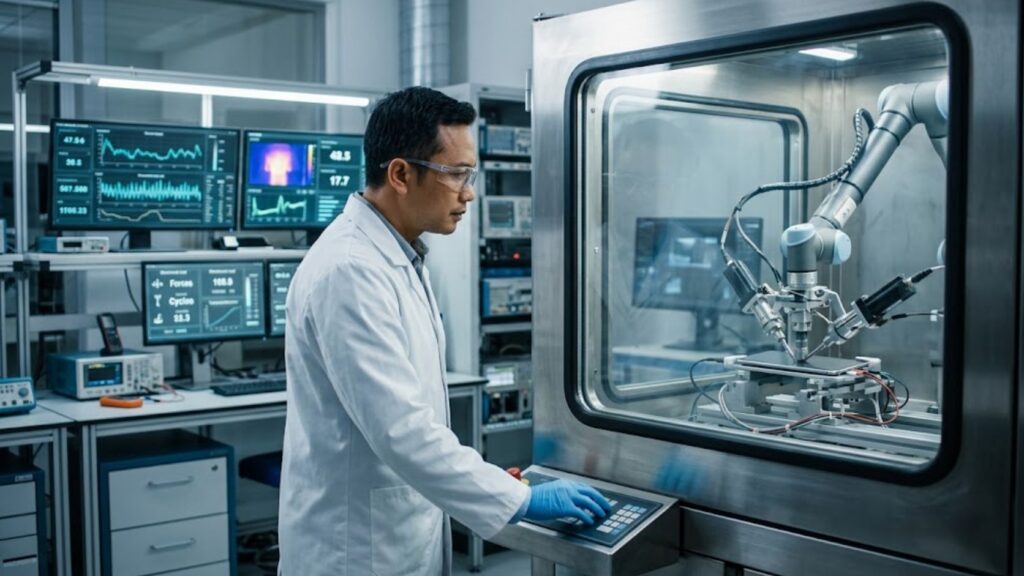
- First, pneumatic robotic arms subject moving parts—such as hinges, switches, and latches—to tens of thousands of continuous operational cycles.
- Next, specialized drop towers release the item from various heights and angles onto concrete or steel plates to mimic accidental slips from countertops.
- Additionally, tensile testing rigs pull on seams, fasteners, and small components to measure structural integrity.
- Consequently, in children’s toys, this rigorous stage confirms that tiny parts will not snap off and present dangerous choking hazards for infants.
2. Electrical Safety and Thermal Management
Household electronics must manage significant electrical currents without creating shock risks or spontaneous combustion.
- Dielectric Voltage Withstand Checks: Technicians inject high-voltage surges into internal circuits to verify that insulation layers prevent electric shock to the user.
- Thermal Runaway Chamber Monitoring: Devices operating on rechargeable lithium-ion batteries undergo aggressive overcharging and short-circuit simulations.
- Flame Retardancy Verification: Technicians expose plastic enclosures to direct burner flames to confirm that materials self-extinguish rather than fuel a domestic fire.
- Therefore, passing these electrical tests guarantees that everyday chargers, laptops, and heaters remain safe to run unattended.
3. Toxicological and Chemical Purity Screening
Modern safety regulations strictly limit harmful chemical compounds in consumer plastics, textiles, and coatings.
- First, mass spectrometry scans materials for restricted substances, including phthalates, heavy metals, bisphenols, and formaldehyde.
- Moreover, items designed for food contact undergo migration testing to ensure that hot liquids or acidic foods do not leach harmful synthetic chemicals from container linings.
- Furthermore, skin-contact goods such as textiles and wearable electronics undergo biocompatibility screenings to eliminate dermatological irritants.
- As a result, chemical compliance prevents both immediate dermal reactions and long-term systemic health consequences.
4. Environmental and Accelerated Aging Chambers
Consumer goods must function reliably whether deployed in humid tropical coastal zones or freezing sub-zero environments.
- Thermal Shock Chambers: Products cycle rapidly between extreme heat and freezing temperatures within minutes to test for material cracking and seam separation.
- Humidity and Salt-Spray Exposure: Metal parts and protective coatings face weeks of concentrated saline fog to measure corrosion resistance and rust prevention.
- Ultraviolet Radiation Simulation: Concentrated UV lamps mimic years of sun exposure to ensure that polymer housings do not degrade, turn brittle, or crumble prematurely.
Step-by-Step Overview: The Product Validation Pipeline
To better understand how raw components transform into a certified household item, examine the sequential verification milestones in the table below:
| Lifecycle Phase | Primary Testing Objective | Key Methods Applied | Final Deliverable |
|---|---|---|---|
| Phase 1: Prototyping | Uncover fundamental structural weaknesses | CAD stress modeling & early drop tests | Iterative design revisions |
| Phase 2: Pre-Production | Verify compliance with global legal statutes | Certified laboratory testing (UL, ISO, IEC) | Official test reports |
| Phase 3: Assembly Line | Maintain consistent manufacturing quality | In-line automated optical and batch checks | Batch release clearance |
| Phase 4: Packaging | Ensure goods survive transit vibrations | ISTA drop, shake, and compression tests | Transit-ready approval |
| Phase 5: Retail Arrival | Prevent unauthorized product tampering | Customs inspections & dock audits | Safe doorstep delivery |
Supply Chain Vigilance: The Battle Against Material Substitution
Completing pre-production lab testing does not guarantee that every mass-produced unit remains equally safe. In fact, global supply chains face a persistent threat known as unauthorized component substitution.
Sometimes, sub-tier part suppliers swap specified materials for cheaper, untested alternatives to trim production expenses. For instance, a vendor might replace flame-retardant polymers with generic flammable plastics without notifying the primary brand.
To counter this danger, reputable manufacturers deploy strict factory auditing programs:
- Randomized Batch Destructive Testing: Inspectors pull finished units directly off the assembly floor at unpredictable intervals and destroy them under testing conditions to ensure compliance.
- Raw Material Verification: Laboratories conduct infrared spectroscopy on incoming plastic pellets and metallic alloys to confirm their chemical signatures match baseline requirements.
- Traceability Tracking: Every critical component receives a digital batch tracking code, allowing engineers to trace any potential defect back to its original manufacturing hour and raw material batch.
Consequently, persistent surveillance along the supply line keeps mass production consistent with certified laboratory standards.
The Final Frontier: Surviving Package Transit and Distribution
A product can pass every factory engineering test yet still arrive broken if its transit packaging is inadequate. For this reason, package testing serves as the critical final barrier before home delivery.
Certified packaging labs utilize International Safe Transit Association (ISTA) protocols to simulate the rough journey through cargo freighters, sorting conveyors, and delivery vans:
- Vibration Tables: Hydraulic platforms subject boxed goods to hours of multi-axis vibration patterns that replicate the turbulent harmonics of long-haul trucking.
- Compression Tests: Heavy hydraulic presses crush shipping cartons to verify that stacked warehouse pallets will not collapse onto the delicate items below.
- Low-Pressure Altitude Chambers: Packaging intended for air freight undergoes decompression checks to confirm that liquid containers and sealed air cushions do not burst at high altitudes.
Therefore, robust transit testing guarantees that internal safety safeguards remain fully intact when you unbox your purchase on your kitchen table.
3 Practical Signs of a Properly Tested Product
While average buyers cannot run independent laboratory checks at home, several clear markers distinguish well-tested merchandise from unverified alternatives:
1. Recognized Independent Certification Marks
Legitimate goods proudly display authenticated marks from recognized independent testing laboratories, such as UL Solutions, CSA Group, Intertek (ETL), or TÜV Rheinland. These marks mean an accredited third party independently audited the device’s safety profile.
2. Comprehensive Traceability Markings
Look at the rating plate or stamped packaging on the device. Compliant products clearly state the manufacturer’s corporate identity, the specific model number, exact electrical ratings, and a clear production batch or serial number.
3. Clear Documentation and Safety Instructions
Thoroughly validated products arrive with clearly translated user manuals, explicit operational parameters, maintenance guidance, and prominent warning sections detailing proper usage. Missing or poorly translated manuals often signal unvetted, substandard manufacturing.
Frequently Asked Questions About Product Safety Testing
Consumers frequently wonder how safety verification operates across global trade networks. Here are direct answers to common questions:
- What is the difference between self-declaration and third-party certification? Self-declaration means the manufacturer simply asserts compliance based on internal assessments. In contrast, third-party certification requires an independent, accredited laboratory to physically test the product and verify that it meets external safety benchmarks.
- Why do some certified products still get recalled? Recalls typically occur when real-world consumer use uncovers rare edge cases, unintended environmental conditions, or long-term component degradation that accelerated laboratory simulations could not replicate.
- Do foreign direct-import goods go through this testing journey? Often, no. Products ordered directly from overseas micro-merchants through cross-border digital platforms frequently bypass regional regulatory import inspections, exposing consumers to unverified and potentially hazardous items.
Conclusion
The safe arrival of a modern consumer product at your doorstep is the culmination of rigorous engineering, strict legal compliance, and continuous scientific testing. Following this product safety testing journey demonstrates how dedicated laboratories protect our daily lives from silent chemical risks, sudden mechanical breakdowns, and electrical fires.
Therefore, take a closer look at the certification seals and quality marks on the goods you rely on every day. By purchasing products from reputable manufacturers that prioritize independent laboratory testing and transparent safety compliance, you actively safeguard your household and support ethical manufacturing worldwide. Real quality goes far beyond surface-level aesthetics; it is built on an unwavering commitment to consumer safety!